You’ve seen the photos. The giant golden picture frame standing in the middle of the desert, with one side showing old Dubai and the other, the glittering modern skyline. But what’s it really like to walk through the Dubai Frame? It’s not just a photo op. It’s a journey through time-without leaving the ground.
What Exactly Is the Dubai Frame?
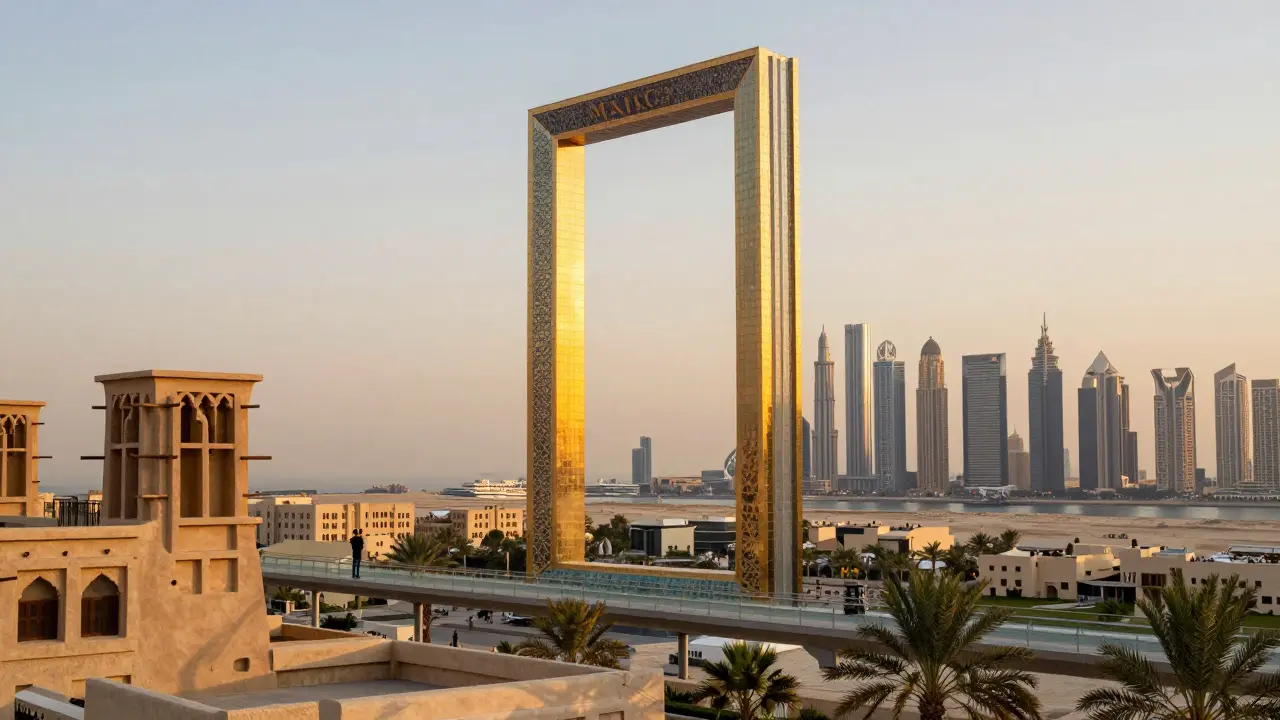
The Dubai Frame is a 150-meter-tall vertical structure shaped like a giant picture frame, located in Zabeel Park, Dubai. It was opened in January 2018 and designed by Fernando Donis, a Mexican architect who won an international competition for the project. Think of it as a living museum-except instead of glass cases and plaques, you’re standing inside a 1,000-square-meter glass-floored bridge that connects two towers.
One side of the frame looks out over the old neighborhoods of Dubai-Al Shindagha, Deira, and Bur Dubai-with their narrow alleyways, traditional wind towers, and historic mosques. The other side? The modern skyline of Dubai Marina, Downtown, and the Burj Khalifa. You’re literally standing between two worlds. And the best part? You can see both at the same time.
Why the Dubai Frame Matters
Dubai didn’t just grow-it exploded. In 50 years, it went from a fishing village with no roads to a city with 3.5 million people and 160 skyscrapers. But what happened to its roots? The Dubai Frame was built to answer that question. It doesn’t just show you the past and future-it forces you to compare them.
Before the frame, most visitors only saw the shiny new Dubai. The old city? That was for locals. The Frame changed that. It gave tourists a way to understand why Dubai’s transformation is so dramatic. And for Emiratis, it became a point of pride. It says: We didn’t forget where we came from.
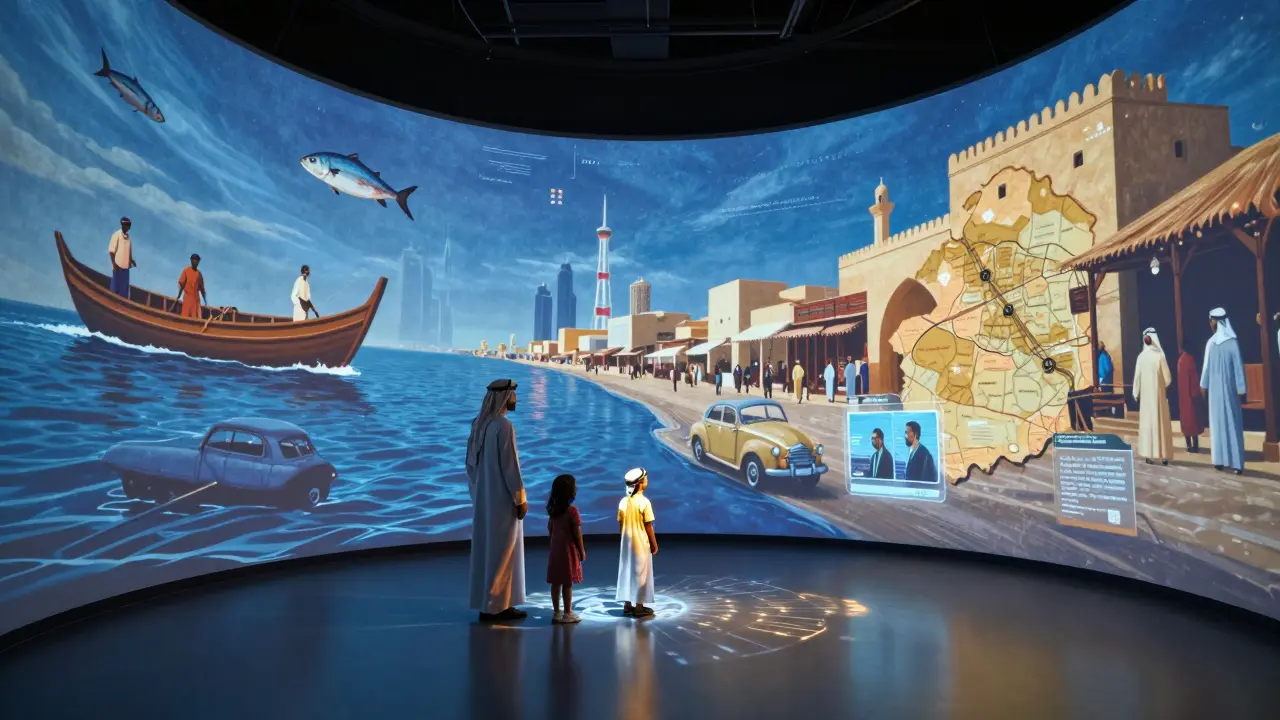
There’s a museum inside the base too-called the Dubai Story. It’s not a stuffy exhibit. It’s an immersive experience with projections, soundscapes, and real stories from people who lived through the change. One video shows a fisherman from the 1960s talking about how he used to row to the other side of the creek. Now, that same route is a 10-minute drive on the Al Maktoum Bridge.
What You’ll See Inside the Dubai Frame
When you enter, you take a short elevator ride up to the observation deck. The glass floor is the highlight. You can look straight down and see people walking below like ants. The view from the bridge is 360 degrees. On the west side, you’ll spot the Al Fahidi Historical Neighborhood, with its coral-stone houses and wind towers. On the east, the Burj Khalifa stands tall, and the Dubai Frame itself casts a shadow over the entire park.
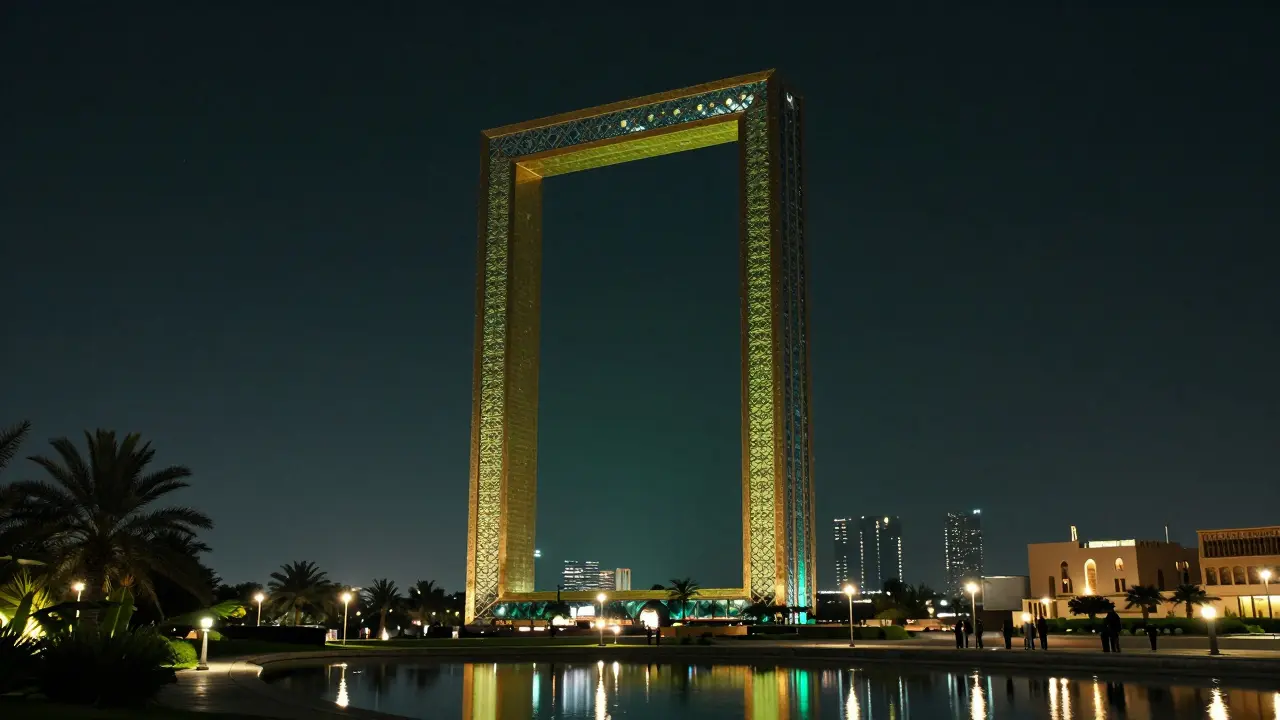
There’s also a light and sound show at night. The frame glows in different colors-gold at sunset, blue at midnight. The lighting changes with the seasons and holidays. During Ramadan, it turns green. On National Day, it flashes red, white, and black. It’s not just architecture-it’s a canvas.
How It Compares to Other Dubai Landmarks
Most people come to Dubai for the Burj Khalifa, Palm Jumeirah, or the Dubai Mall. Those are about scale and luxury. The Dubai Frame is about meaning. It doesn’t have roller coasters or luxury shops. It doesn’t need to. It tells a story no other building in Dubai can.
Compare it to the Burj Khalifa. You go up there for the height. You go to the Frame for the perspective. One makes you feel small. The other makes you feel connected.
And unlike the Dubai Museum, which is tucked away in a fort, the Frame is visible from miles away. It’s a landmark you can’t miss. Even if you don’t go inside, you’ll see it from the highway, from the metro, from your hotel balcony.
Visiting Tips: How to Make the Most of Your Trip
- Go early or late. The best light for photos is just after sunrise or before sunset. Midday sun washes out the colors.
- Book tickets online. You can buy them on the official website or through Klook. Lines get long, especially on weekends.
- Wear comfortable shoes. You’ll walk about 1.5 kilometers total-through the museum, up the elevator, across the bridge, and back down.
- Bring a power bank. Your phone will die taking pictures. There are no charging stations inside.
- Don’t skip the museum. It’s included in the ticket. The stories here are more powerful than any postcard.
Dubai Frame vs. Other Iconic Frames Around the World
| Structure | Location | Height | Purpose | Unique Feature |
|---|---|---|---|---|
| Dubai Frame | Dubai, UAE | 150 meters | Historical contrast | Glass floor with views of old and new Dubai |
| Golden Gate Bridge | San Francisco, USA | 227 meters (towers) | Transportation | Iconic suspension bridge, painted red |
| London Eye | London, UK | 135 meters | Observation wheel | Rotating capsules with panoramic views |
| China’s “Sky Mirror” Frame | Chongqing, China | 120 meters | Architectural art | Reflective glass surface mimics the sky |
The Dubai Frame is the only one that literally frames two eras of a city’s evolution. The others are either bridges, wheels, or mirrors. This one is a time machine.
Is It Worth the Price?
Tickets cost AED 50 for adults and AED 20 for children under 12. Seniors and people with disabilities get free entry. That’s about $13-$14 USD. For comparison, the Burj Khalifa’s standard ticket is AED 149. The Frame is half the price-and you walk away with something deeper than a photo.
It’s not a thrill ride. It’s a thought ride. If you want to understand Dubai beyond the malls and hotels, this is the place. You’ll leave not just with pictures, but with context.
Where to Go After the Dubai Frame
The Frame sits right in Zabeel Park, one of Dubai’s largest green spaces. After your visit, take a walk through the park’s shaded trails. You’ll find cafes, a small lake, and locals playing chess under the trees. It’s a quiet contrast to the city’s usual buzz.
Just a 10-minute drive away is Al Fahidi Historical Neighborhood. Walk its narrow lanes, visit the Coffee Museum, or sip cardamom coffee in a 19th-century wind tower house. That’s where the story the Frame tells actually began.
Frequently Asked Questions
Is the Dubai Frame open every day?
Yes, it’s open daily from 9:00 AM to 9:00 PM. Last entry is at 8:00 PM. It stays open on public holidays and during Ramadan, with adjusted hours during the holy month.
Can you take photos inside the Dubai Frame?
Absolutely. In fact, it’s designed for photos. The glass floor and the two contrasting views make it one of the most photographed spots in Dubai. But no drones are allowed-no exceptions.
Is the Dubai Frame wheelchair accessible?
Yes. Elevators, ramps, and accessible restrooms are available throughout the site. The glass bridge has safety railings, and staff are trained to assist visitors with mobility needs.
How long does a visit to the Dubai Frame take?
Most visitors spend 1.5 to 2 hours. The museum takes about 30 minutes, the bridge walk is 15 minutes, and the rest is for photos and soaking in the views. If you’re in a rush, you can do it in 45 minutes-but you’ll miss the stories.
Are food and drinks available inside?
There’s a small café at the base of the frame serving coffee, juices, and snacks. No full meals. You’re better off grabbing something before you go or heading to Zabeel Park’s nearby food stalls after your visit.
Is the Dubai Frame suitable for kids?
Yes, but it’s not a playground. Younger kids might find the glass floor a little scary at first. But the museum’s interactive displays and the view of the skyline usually keep them engaged. Kids under 12 get discounted tickets, and strollers are allowed.
Final Thought: More Than a Frame
The Dubai Frame doesn’t just show you two sides of the city. It shows you how fast change can happen-and how important it is to remember where you started. It’s not a monument to wealth. It’s a monument to memory.
If you’re only going to visit one thing in Dubai that isn’t a tower or a mall, make it this. You won’t just see the city. You’ll understand it.